Waukesha Epoxy Flooring installs industrial epoxy flooring in Waukesha, WI, serving surrounding cities including Pewaukee, New Berlin, Brookfield, Hartland and Delafield. The industrial parks around Waukesha County are full of machine shops, fabricators, foundries, food and beverage plants, and warehouses, and their floors take a kind of abuse a garage never sees: steel wheels, dropped parts, cutting coolant, hydraulic oil, cleaning chemicals and forklifts running two or three shifts. In more than 20 years of coating concrete, we have learned that an industrial floor has to be specified for the work done on it, not chosen from a color chart.
Every industrial job starts with the slab. We grind or shot blast it to the profile the system needs, never acid etch, test for moisture as a line item, and read the cracks, joints and old coatings before pricing anything. If the slab needs repair or replacement before it can carry a coating, we say so plainly, because the most expensive industrial floor is one that has to be redone during production.
The proposal names the products, the system build and the finished thickness, and the schedule is planned around the hours the plant has to keep running, including overnight, weekend and shutdown windows.
Choosing the Right Industrial System
Thin-Film, High-Build and Mortar Floors
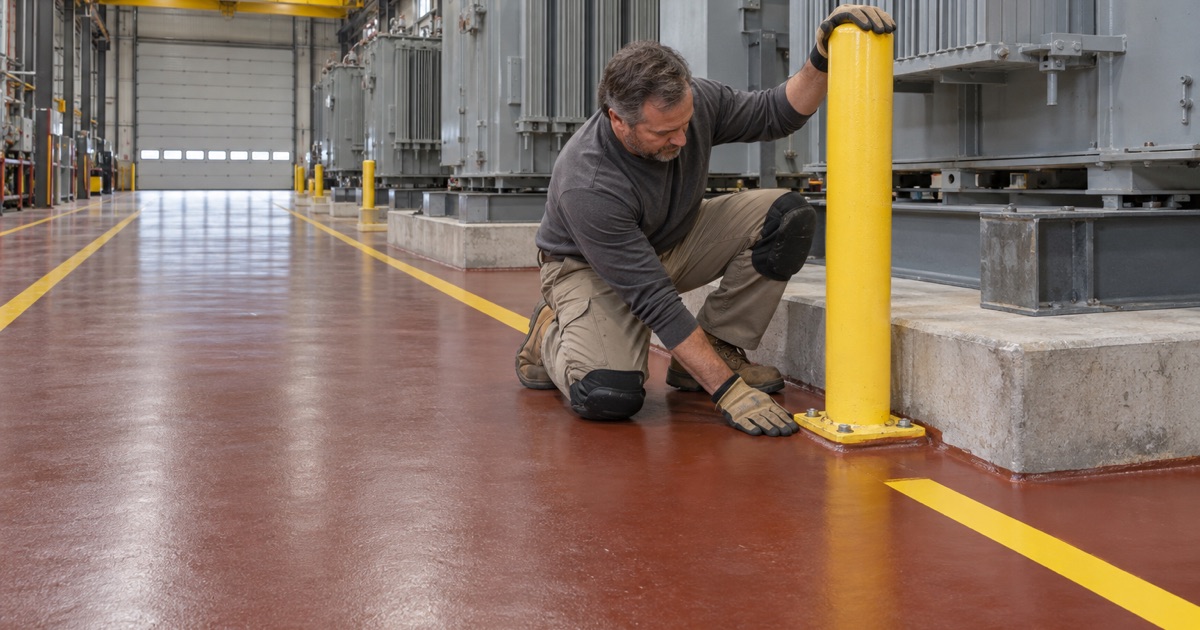
Industrial floor systems sit on a ladder of thickness. Thin-film coatings are rolled on at a few mils and suit light foot traffic and dust control. High-build systems use 100% solids epoxy built up in layers, often with a broadcast, and suit most warehouses, assembly areas and shops with rubber-wheeled traffic. Troweled epoxy mortars are much thicker and stand up to heavy impact, steel wheels and point loads.
Many low-priced quotes are thin-film systems described in the same words as high-build floors. Stating the finished thickness in writing is how we make sure two bids are describing the same floor.
Urethane Cement for Heat and Washdown
Where floors see hot water, steam cleaning, thermal shock or constant wet processing, standard epoxy softens and can lose its bond. Urethane cement systems are designed for those conditions and tolerate heat, moisture and many aggressive chemicals. They are common in food and beverage plants, dairies, breweries and wash bays across Wisconsin.
Urethane cement is also more tolerant of damp concrete than most epoxies, which helps on older plant slabs with no vapor retarder beneath them. It is troweled or broadcast at a much heavier build than a coating, so it needs a deeper surface profile, usually from shot blasting, and saw-cut keyways at its edges to lock it into the slab.
Chemical Resistance Matched to the Process
No single topcoat resists everything. Coolants, hydraulic fluids, acids, caustics and solvents each attack resins differently, so we ask what is actually spilled, how often and how hot, then compare those against the manufacturer’s chemical resistance data. The topcoat that wins in a battery charging room is not the one that wins in a machining cell.
Machine Shops, Foundries and Warehouses
Oil, Coolant and Anchored Machines
Machining floors carry years of oil and coolant soaked into the concrete, and heavy machines bolted down through the slab. We degrease and grind the contamination out, test the cleaned surface, and use a primer made for oil-tolerant bonding where needed. Around machine bases and anchors, we detail the coating so it seals the edges rather than leaving gaps for coolant to get under.
Where machines cannot be moved, we work around them and coordinate with your maintenance staff on which equipment can be lifted, shifted or isolated during the job. Machines that stay in place are masked and protected from dust before grinding begins.
Foundry and Heavy Fabrication Floors
Foundries and heavy fabrication shops add heat, sparks, dropped castings and abrasive grit to the mix. These floors usually need a troweled mortar or urethane cement build rather than a thin coating. Areas with molten metal exposure or extreme heat may be better left as bare, densified concrete, and we will tell you where a coating is the wrong answer.
Warehouses and Forklift Aisles
In warehouses, forklift aisles and loading docks carry the most wear. We build those lanes thicker where needed, fill joints with a semirigid filler so wheel edges stay supported, and add texture where docks get wet from snow and rain blowing in. Aisle striping and pedestrian walkways can be built into the system rather than painted on later.
Racking areas need attention too. Rack anchors drilled through a new coating crack its edges, so where racking is going in or being moved, we plan the layout with you and coat before the racks are anchored, or detail around existing base plates so the coating seals cleanly against them.
Food Plants, Downtime and Cleanup
Food and Beverage Plants Under ATCP 70
Wisconsin’s food processing plant rule, ATCP 70, requires floors in processing areas to be smooth, impervious and easily cleanable. We build food plant floors as seamless systems, typically urethane cement, with integral coved transitions at the walls so washdown water and product cannot collect in joints or pores. Work is scheduled around production shutdowns and sanitation cycles.
Overnight and Weekend Installations
Industrial owners rarely get a full week of downtime. We phase large floors, run grinding off-shift, and choose fast-curing materials when the return-to-service window is short. The phasing plan and return-to-service times are confirmed in writing before work starts, so production planning can work around them.
Dust, Slurry and Air Quality
Grinding dust is captured by vacuum at the cutting head, and slurry is contained and hauled away rather than washed into floor drains or storm sewers, consistent with the Waukesha sewer use limits on solids. We favor 100% solids epoxy systems, which carry very little solvent, a sensible choice in a county where the area north of I-94 and east of Highway 67 sits within the Milwaukee 2015 ozone nonattainment area.
- 20+ Years Coating Concrete
- Moisture Testing in Every Scope
- Written Contract Before Any Deposit