What an Epoxy Garage Floor Job Involves
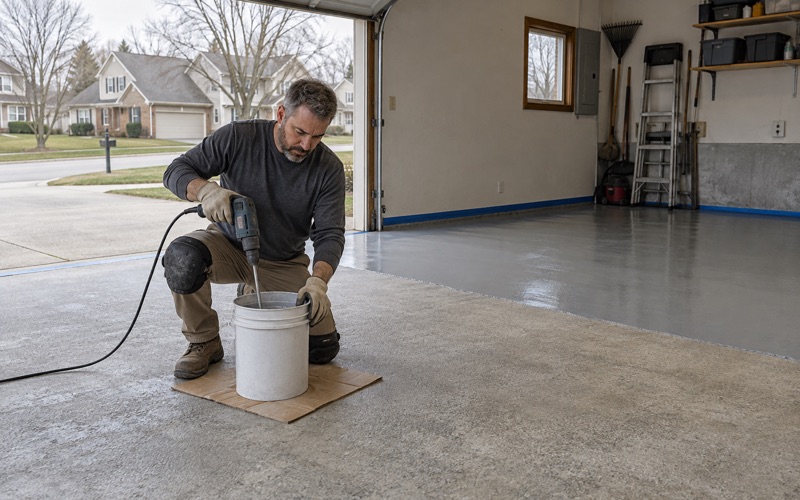
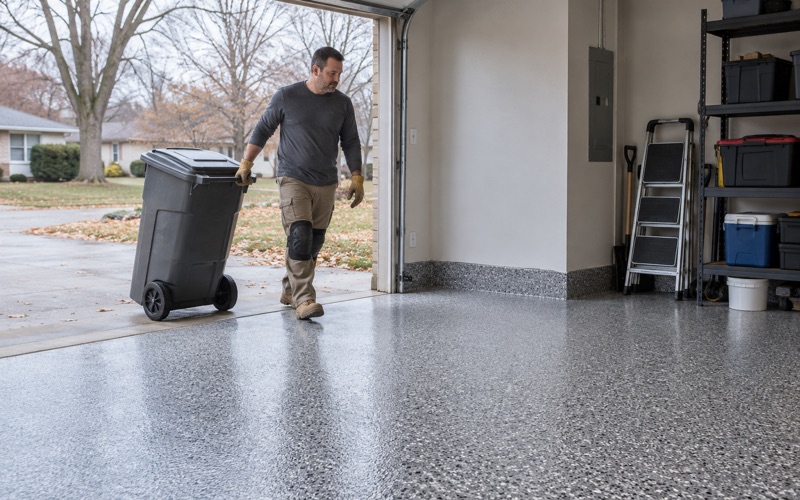
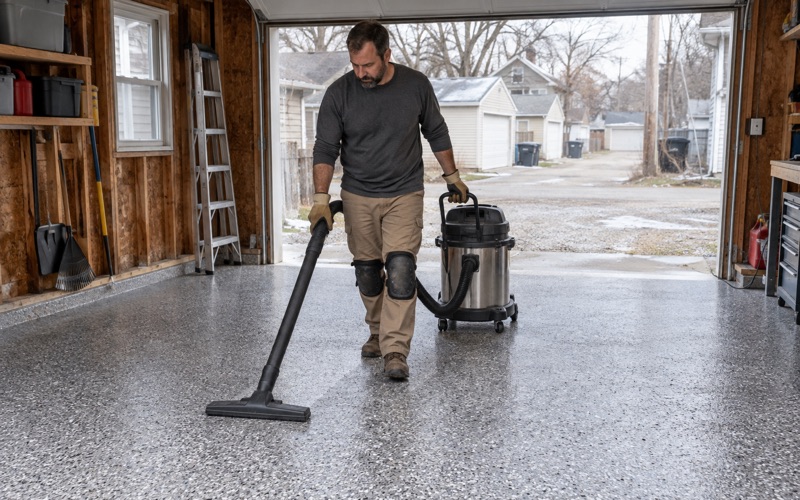
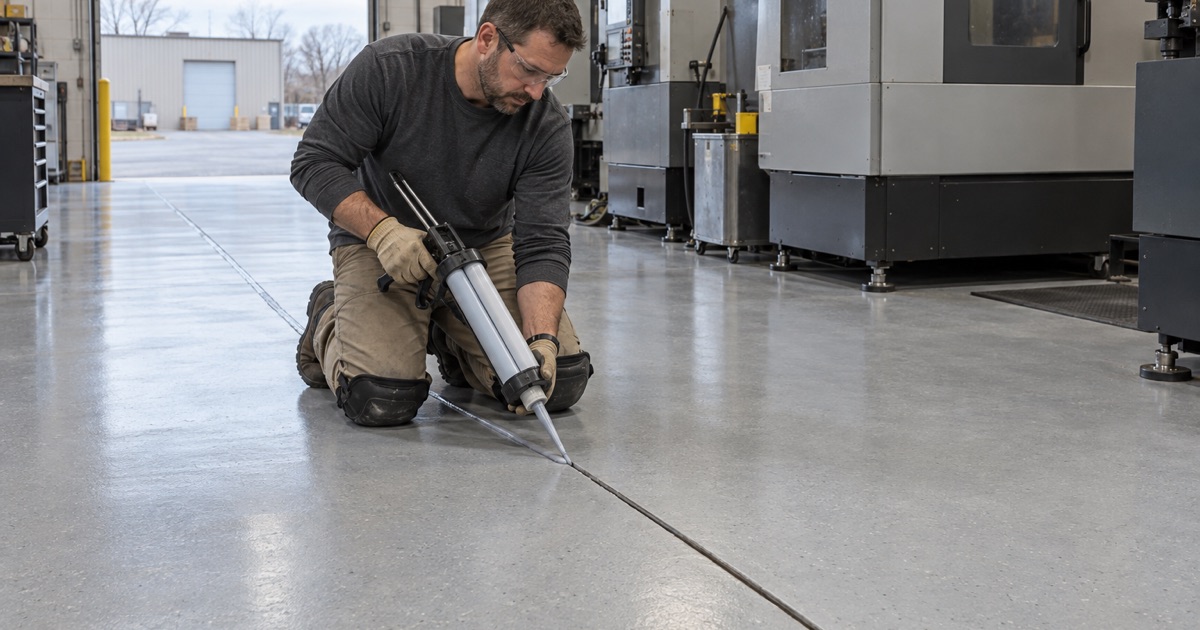
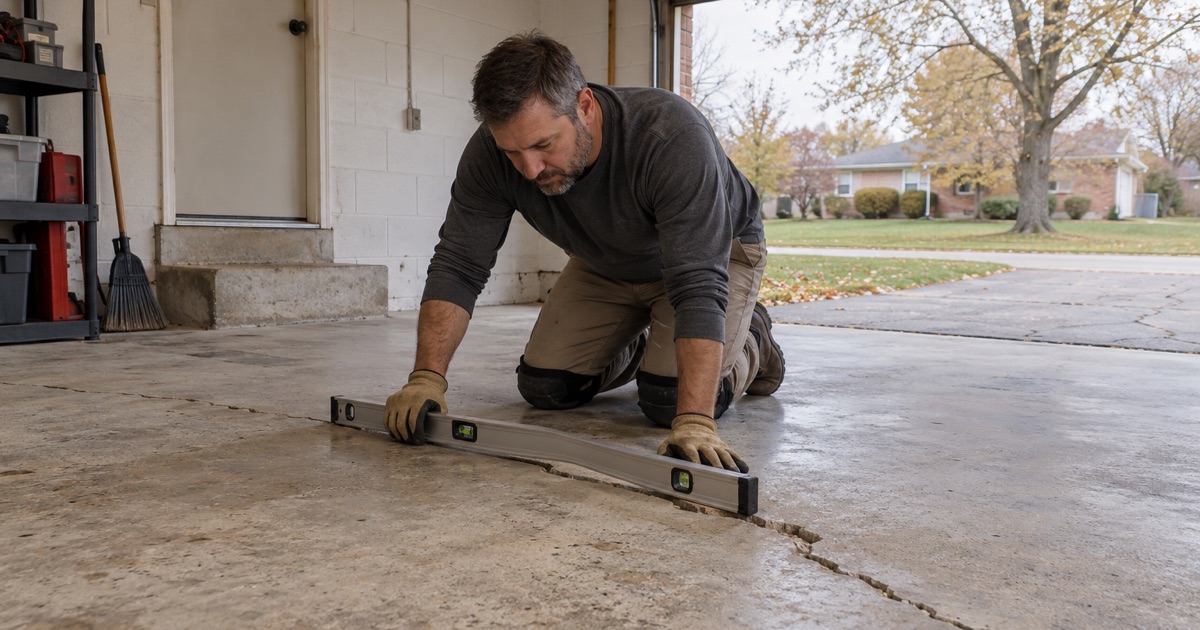
An epoxy garage floor job starts with a look at the slab: its age, the cracks and joints, any old sealer or paint, and how wet the concrete is. From there we grind, repair, prime, build the base coat, broadcast flake or color, and seal with a topcoat, and we hand you a written date for driving on it. Knowing the whole sequence up front is what lets you plan around the two or three days the garage is out of use.
Diamond Grinding a Sealed or Painted Slab
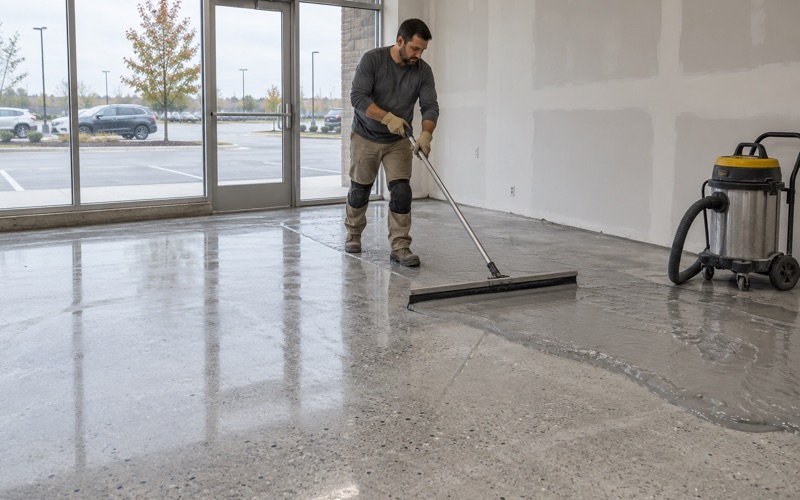
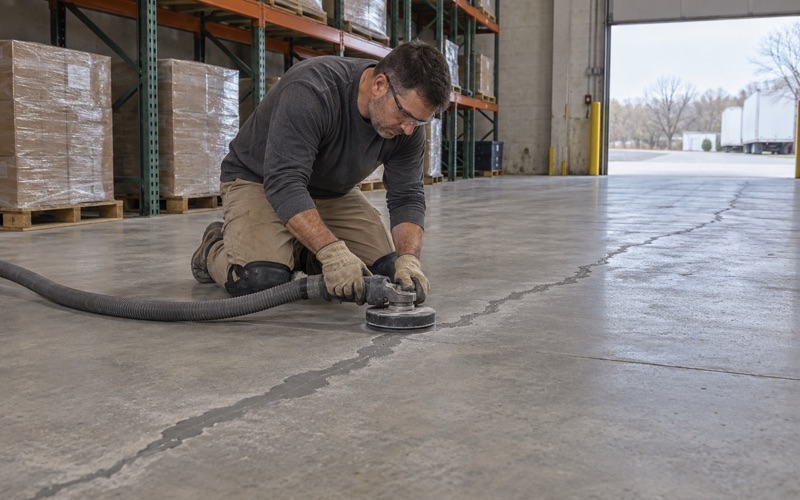
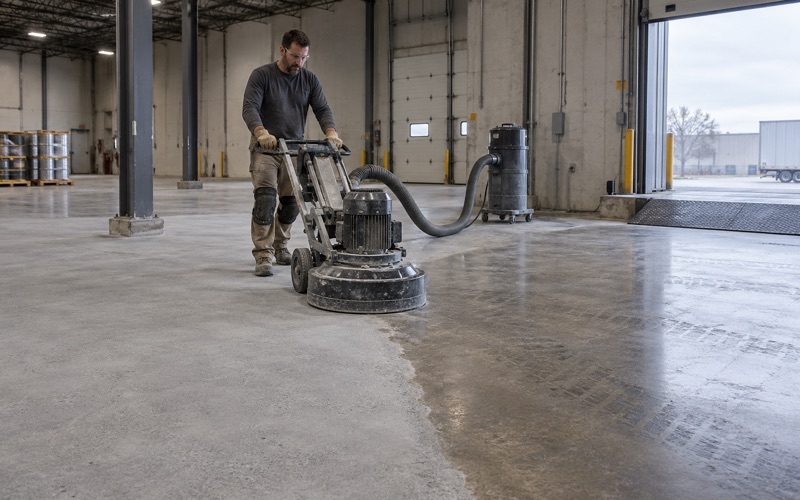
A coating can only grab concrete it can actually reach, and a slab carrying a cure-and-seal, a water repellent or old paint gives it nothing to hold. We grind through those layers to open, profiled concrete before anything is applied. Skipping that step is the single most common reason a garage coating lets go in sheets within a year or two.
Moisture Testing and the Missing Vapor Retarder
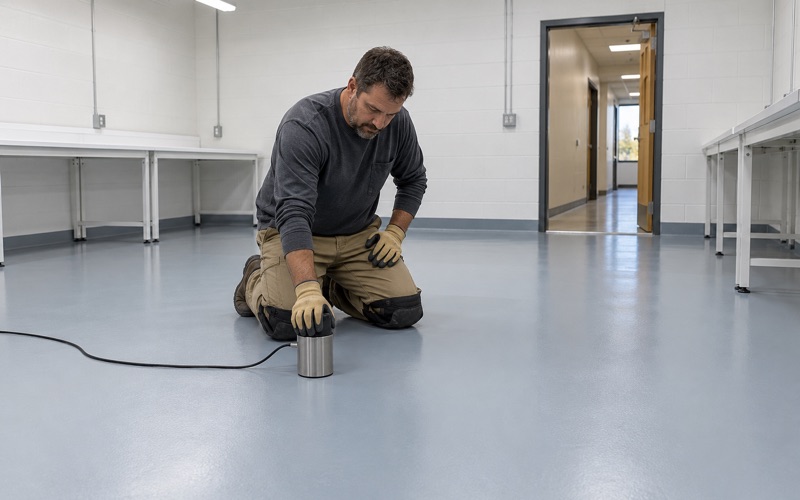
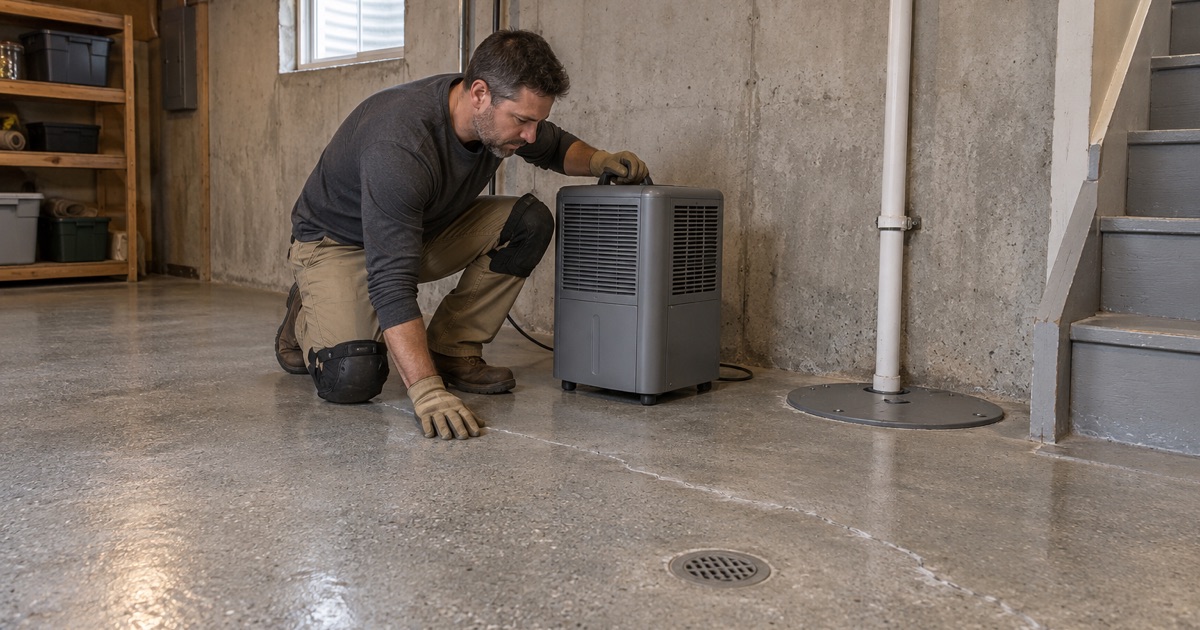
Wisconsin’s dwelling code does not require a vapor retarder under an unconditioned attached garage slab, so many garage floors here sit directly on gravel with nothing stopping ground moisture. We test before we coat rather than assume a dry-looking floor is a dry one. Where the readings call for it, a moisture-mitigation primer goes under the system rather than gambling the floor on a sunny afternoon’s appearance.
What the Wisconsin Dwelling Code Asks of a Garage Slab
Under SPS 321.203, a Wisconsin garage floor has to be concrete or another noncombustible material impermeable to petroleum products, at least 4 inches thick over at least 4 inches of granular fill, and sloped toward the overhead door or a drain. The code says nothing about sealing that slab or coating it. We keep the existing slope to the door intact, because a coating should never send meltwater back toward the house.
Coating Versus Replacing, and the Permit Question
Coating a sound slab and tearing out a failed one are different jobs, and the City of Waukesha fee schedule treats them differently, pricing residential alteration and attached garage work by the square foot. A floor coating is not named in the schedule either way, so we ask City of Waukesha Building Inspection before we book the work. If the slab needs replacement, you hear that before you hear a coating price.
Road Salt, Brine and Bare Concrete
Rock salt and calcium chloride brine do their damage by soaking into bare concrete and expanding through repeated freeze-thaw cycles, which flakes the surface off near the door and under the tires. A sealed coating keeps the chlorides on top, where they can be rinsed off. That is the practical case for coating a Waukesha garage, well before looks come into it.
Coating a Garage Through a Waukesha Winter
The Waukesha weather station in the Fox River valley averages more than 140 nights at or below freezing a year, and an unheated garage slab tracks those temperatures closely. Resin cures slowly or not at all on a cold slab, and moisture condenses on it when the surface sits too near the dew point. A heated garage can be coated in January; an unheated one usually waits.
Bubbles, Pinholes and Outgassing
Concrete holds air in its pores, and when a slab warms while a fresh coat is curing, that air rises and leaves bubbles and pinholes behind. We avoid it by applying when the slab temperature is steady or falling and by priming porous concrete first. A floor full of pinholes is not cosmetic, because each one is a path for brine to reach the slab.
Store-Bought Kits Versus a Professional System
A garage floor epoxy kit pairs an acid etch with a thin, often water-based coating, and a store-bought kit cannot change either of those things. A professional system starts with mechanical grinding and builds a 100% solids epoxy base with a polyaspartic or polyurea topcoat at a stated thickness. The difference shows up the first winter, when kit floors lift under hot tires.
What a Garage Floor Costs and Why It Varies
The price of an epoxy garage floor moves with the square footage, the condition of the slab, how much crack and joint repair it needs, whether moisture mitigation is required, and the system build. A full flake broadcast with a polyaspartic top costs more than a single solid color coat, and it lasts longer. We price each of those items separately so you can see where the money goes.
Warranty Exclusions, Moisture First
Almost every coating warranty excludes failure caused by moisture coming up from below the slab, and most also exclude impact damage and chemicals beyond the rated list. We read those exclusions out before the job is sold, with moisture named first, because a warranty that does not cover the most likely failure should be understood before you sign rather than after.